Kaysersberg → Alsace Wine Route → Alsace → France
Kaysersberg: a guide for first-time visitors
A historic wine village on the Alsace Wine Route, built along the Weiss river below a ruined castle. Small enough to walk in an afternoon, and more interesting if you understand what you are looking at.
- Published
- Last reviewed
Why visit Kaysersberg
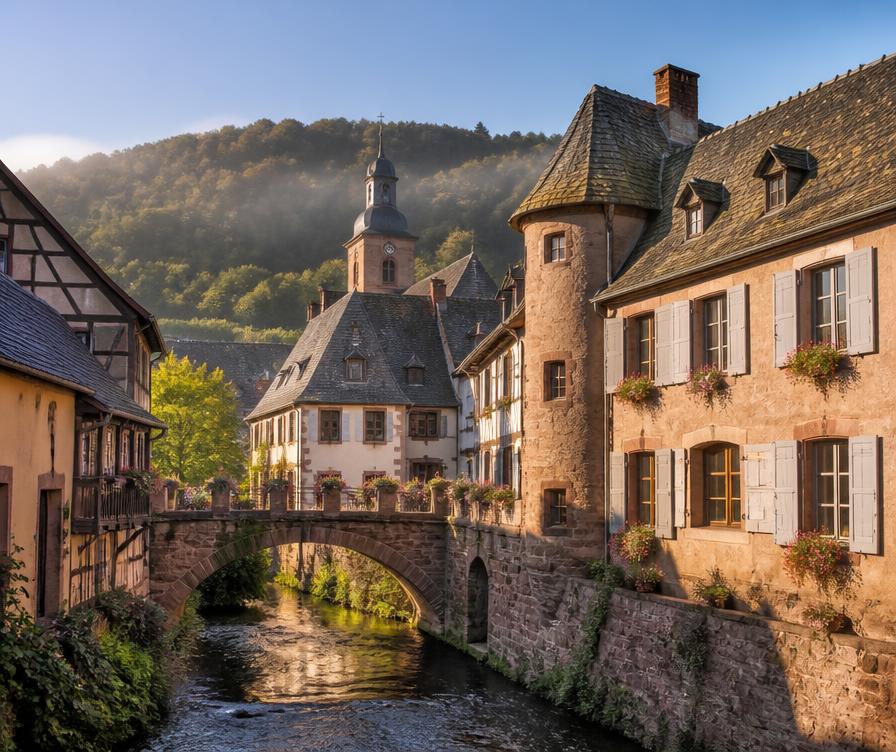
Kaysersberg was a fortified town on the road between Alsace and Lorraine, and the shape of that history is still visible: a castle keep on the hill above, a walled centre along the valley floor, a fortified bridge over the Weiss and merchant houses built from local sandstone and timber. Today it is a wine commune of a few thousand residents on the Alsace Wine Route, with vineyards rising directly behind the houses.
What makes it worth a stop is the combination of a very compact centre, an immediate edge — you are in the vines within a few minutes' walk — and a working wine village rather than a purely ornamental one. What makes it demanding is the same compactness: on a summer afternoon or a December weekend, the main street carries a great many visitors at once.
How long to spend
Two hours covers the main street, the church, the bridge and a climb to the castle. Half a day allows a tasting and a meal. An overnight stay is a different proposition: the village empties in the evening, and early morning before the coaches arrive is the quietest, best light of the day. If you are choosing a single base for several nights, read where to stay in Alsace first.
What to see
- The castle keep — a short, steep climb from the centre to the ruins, with a view along the valley and over the vineyards.
- The fortified bridge — the crossing over the Weiss, and the classic view back towards the old houses.
- The church of Sainte-Croix — the parish church in the centre of the old town, notable for its carved altarpiece.
- The main street — sandstone and timber-framed façades, courtyards and signs of the village's guild and wine history.
- The vineyard paths — marked walking routes leave from the edges of the village directly into the vines.
Wine and wineries
Kaysersberg is a wine village: several family estates operate in and around it, and the surrounding slopes include Grand Cru vineyard land. Tasting rooms are generally small and attached to the estate itself. Some receive visitors during the day without an appointment; others prefer you to write ahead, particularly outside summer and during the autumn harvest.
We are not naming individual producers yet. A recommendation is only useful if someone has visited recently and rechecked it, so those will appear here with dates once they have been.
Where to eat
The village has restaurants, winstubs and bakeries along and just off the main street. Two things are worth knowing in advance: service times are earlier and shorter than in a city, so dinner tends to start around seven and finish early; and in high season and during Advent, reserving is sensible rather than optional.
Named restaurant recommendations are held back until we have eaten there and can date the visit.
Where to stay
Accommodation is limited in scale — small hotels, guest houses and apartments rather than large properties — and books out early for Advent weekends and summer. Staying in the village gives you the early mornings and evenings that day visitors never see. If you would rather have more restaurants, a train station and more choice, base yourself in Colmar, roughly a 20-minute drive away.
Getting there
Kaysersberg lies west of Colmar, at the mouth of the Weiss valley on the central section of the Wine Route. Colmar is the nearest railway hub, with connections from Strasbourg and Basel; from there the village is a short drive or a regional bus ride. Basel–Mulhouse and Strasbourg airports are the closest air gateways.
Parking
The historic centre is largely closed or restricted to traffic, and visitors park in signed car parks on the approach roads and walk in — a few minutes on the flat. In high season and during the Christmas market, arriving early in the day makes a substantial difference to how much time you spend looking for a space.
Charges and restrictions change, so we do not quote prices or hours until they have been checked in person.
Kaysersberg without a car
It is possible. Regional buses connect Colmar with the village, and organised Wine Route tours from Colmar and Strasbourg frequently include it. Plan around the return timetable, which is thinner in the evening and at weekends, and expect to see one or two villages in a day rather than four. See the Wine Route guide for the wider car-free options.
Kaysersberg at Christmas
During Advent the village holds one of the better-known Christmas markets in Alsace, with stalls through the old centre. It is genuinely atmospheric and genuinely crowded: weekend afternoons bring heavy visitor numbers and slow traffic on the approach roads. Weekday visits, early arrivals and staying overnight all help. Accommodation for these dates is often taken months ahead.
Market dates and opening times vary each year and are published here only once verified.
What to combine with Kaysersberg
- Riquewihr and Ribeauvillé, both a short drive north, for a classic three-village day.
- Colmar, for museums, restaurants and a larger old town.
- A vineyard walk between villages, which shows you the slope structure far better than driving.
- The Vosges foothills west of the village, if you want forest and altitude rather than vines.
Practical tips
- Cobbles and a steep castle path: wear shoes you can walk and climb in.
- Arrive before mid-morning or after five in high season for the quietest streets.
- Plan dinner earlier than you would in a city, and book in busy periods.
- Decide who is driving before the first tasting; French limits are low.
- Carry a little cash for small producers and market stalls.