
Riquewihr → Alsace Wine Route → Alsace → France
Riquewihr: a practical guide for first-time visitors
Riquewihr makes a powerful first impression: a walled wine town rising toward the Dolder, with vineyards pressed against its edges. The better visit begins after that first photograph—when you step off the main street and decide not to rush.
- Published
- Last reviewed
Why Riquewihr stays in the mind
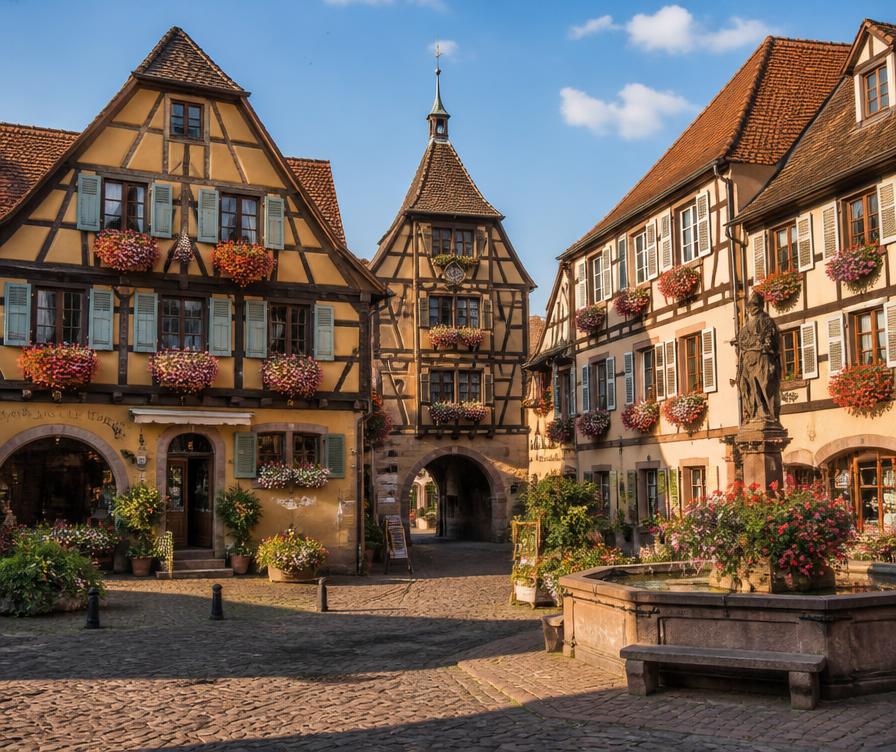
Riquewihr is a medieval wine town on the Alsace Wine Route, enclosed by surviving defensive walls and surrounded by vines. The main street climbs gently toward the Dolder, the gate tower built in 1291. That long view is unusually coherent: façades, signs and rooflines draw the eye upward until the tower closes the composition.
Its appeal is immediate, which is both gift and problem. Many visitors stop where the view is most obvious, so the centre can feel compressed into one crowded photograph. Riquewihr becomes more rewarding when you use the main street as orientation, not the whole experience.
Who should choose Riquewihr?
Come here if you want the strongest sense of a fortified wine town: a gate, walls, dense old houses and vineyard slopes visible from the edge. It suits architecture-minded visitors, wine travellers interested in place, and anyone willing to time the visit around the busiest hours.
Choose Eguisheim instead if intimacy and an effortless half-day matter more. Choose Kaysersberg if you want a river and castle walk. Riquewihr is the most theatrical of the three—and the one where crowds can most alter the mood.
A route that reveals more than the main street
Walk uphill first to understand the town’s axis, but do not stay on it. At the Dolder, turn toward the Upper Gate and the outer defensive line. The contrast matters: the colourful inward-facing tower belonged to the town; the plainer outer face was built for defence. Nearby walls and towers make the medieval structure legible rather than decorative.
Return downhill by the side lanes. Here the pace changes. Courtyards, wells and the less polished backs of buildings make the place feel inhabited. If the Dolder museum or the Thieves’ Tower is open, either can add historical depth, but opening periods change and should be checked before the visit.
The quiet version is a different place
At midday in a busy season, movement along the main street can determine your speed for you. Come early and the façades read as architecture rather than scenery behind a crowd. Stay into late afternoon and you feel the town release its breath as day trips end.
This is the best argument for sleeping inside or near the walls. You are not buying more attractions; you are buying the hours when the balance shifts back toward residents, supper and closed shopfronts. If evening choice matters more than that atmosphere, sleep in Colmar and arrive early.
Look above the roofs to understand the wine
Riquewihr is enclosed by vineyard slopes, including Schoenenbourg to the north and Sporen nearby. Schoenenbourg’s steep south- and south-east-facing ground is closely associated with Riesling. Seeing the slope from the town makes “terroir” less abstract: the wine name belongs to a visible piece of land, not simply a label.
Many cellars sit within wine villages rather than out among the vines. Arrange a tasting if it matters to you, particularly during harvest or outside the main season. We do not name producers until visits can be checked and dated; reputation alone is not enough for a recommendation.
Arrival, parking and car-free travel
Drivers should aim for signed parking outside the historic walls and walk in. That approach protects the town and gives you the intended arrival: from open vineyard edge into a narrow gate and dense streets. Current charges, restrictions and peak-event arrangements can change, so check them before travel rather than relying on an old map or forum post.
Without a car, regional transport and organised tours connect the area with Colmar. The limitation is not reaching Riquewihr but controlling the return, especially later in the day. Check both legs before leaving. The Alsace base comparison helps weigh this against staying in a village.
Lunch, dinner and staying overnight
The centre has restaurants, winstubs, cafés and wine shops, but peak lunchtime brings pressure to the same small area. Reserve when the date matters, or eat slightly earlier or later than the main wave. Dinner is quieter, with less choice than Colmar and an atmosphere that feels more local once day visitors leave.
One night is enough to experience that shift. Two can work for vineyard walking and nearby villages. For a longer stay without a car, Colmar is more forgiving; for a wine-led trip with a car, Riquewihr can be an atmospheric base.
Riquewihr at Christmas
Advent intensifies everything: the town’s scale, the lights, the sense of enclosure—and the visitor pressure. On peak dates, access and parking arrangements may differ substantially from an ordinary week. Verify the current market dates and official transport plan, favour a weekday if possible, and use seasonal shuttles or park-and-ride arrangements when offered.
What to combine with Riquewihr
- A vineyard walk toward nearby Hunawihr or Ribeauvillé, for landscape after dense streets.
- Kaysersberg, for a contrasting river valley and castle climb.
- Eguisheim, if comparing village forms matters more than covering distance.
- Colmar, for museums, rail connections and a broader evening.
A satisfying day might be Riquewihr early, a walk or tasting at midday, and one second village later. The mistake is not choosing the wrong village; it is allowing the car park itinerary to replace the experience.
Questions travelers ask
- How long do you need in Riquewihr?
- Allow two to four hours for the old town, side lanes and a pause. Half a day works better if you visit a museum, arrange a tasting or walk into the vineyards. Stay overnight for the quieter evening and morning, not because the village has a long list of additional sights.
- Is Riquewihr worth visiting?
- Yes, if you value intact defensive architecture, a strong sense of arrival and vineyards immediately beyond the walls. It can feel crowded at peak times, so timing determines whether you notice the town itself or mostly the visitor flow.
- When is Riquewihr least crowded?
- Early morning and later afternoon are usually calmer than the middle of the day, while weekdays generally avoid the strongest weekend pressure. Summer and Advent need the most deliberate timing. This is practical guidance rather than a guarantee; events and tour arrivals change the pattern.
- Can you visit Riquewihr without a car?
- Yes. Regional buses and organised tours connect the village with Colmar and nearby places, but services vary by season and day. Check the return journey before leaving. Staying in Colmar is usually simpler for a multi-day car-free trip.
- Should you stay in Riquewihr or Eguisheim?
- Choose Riquewihr for a more imposing walled-town experience, a strong main street and immediate Grand Cru vineyard scenery. Choose Eguisheim for a smaller, softer circuit that is easy to enjoy in half a day. Both become more atmospheric after daytime visitors leave.